The Glass We Forgot We Were Wearing

Imagine that as a child, you were given a pair of glasses—not ordinary ones, but lenses that cast the entire world in a deep shade of purple. Everything you looked at—trees, faces, buildings, the sky—took on the tones of violet and lavender, as if reality itself had been dipped in purple paint. The shadows wore lilac, daylight filtered through a soft plum glow, and even the sun shimmered with a quiet amethyst light. The world felt like one endless grape snow cone in July because you’d never known anything else.

You never removed them. Not once. And over time, you stopped noticing they were there. You simply assumed that everyone saw what you saw. Purple sunsets were just how the sky said goodnight. Indigo oceans were just the way water looked. You had no memory of a world before the lenses, no experience of contrast, no reason to believe that anything could be different than the way it had always been.

The truth? We’re all wearing such glasses. Not literal purple ones, of course, but perceptual filters just as powerful, just as invisible to us, just as thoroughly convincing in their distortion of reality. The human experience is shaped not by what we see—but by how we’ve been conditioned to see.

Some walk through life with lenses etched by early fear, where every stranger reads as threat and every silence rings with rejection. Others wear glasses polished by perfectionism, where no win feels like enough and no rest feels earned. Some are outfitted with frames that only zoom in on risk. Others with lenses that dim joy just enough to keep hope at arm’s length.

These lenses were formed in moments we remember vividly—and in others we barely registered. And over time, they stopped feeling like lenses. They started feeling like truth.

But what if they’re not?
What if that quiet dissatisfaction that hums beneath your accomplishments isn’t a flaw in character—but a flaw in the prescription?
What if that ache for connection, or that constant scanning for failure, isn’t who you are—but how you’ve been trained to see?

This isn’t just metaphor. It’s neurobiology. It’s the architecture of consciousness. The lens becomes the interface between your nervous system and the world. It decides what you register, what you dismiss, what you believe is possible for someone like you.

And here’s the most interesting part of all:
You didn’t choose the first pair you were given.
But you can choose the next.

What might happen if you became the optometrist of your own perception?
What might shift if you examined the prescription you’ve worn for decades—and found the courage to adjust it?
What might you see if you allowed yourself to try on something new—clearer, softer, wilder, truer?

This exploration is your invitation to do exactly that:
To notice the colors you’ve always accepted as real.
To question the edges you thought were limits.
To trace the fingerprints of your old lenses back to the hands that shaped them—and then, with reverence and clarity, to begin grinding new ones.

Because just beyond your current field of vision, there are entire landscapes of possibility and beauty.
They’ve always been there.
You just need the right lens to see them.

Because there is a cost to carrying an unexamined lens—one that doesn’t appear on paper or in the bank account, but in quieter, heavier ways. It shows up in joy that feels muted. In doors never knocked on. In relationships that stay surface-level, not because we don’t crave more, but because we’ve quietly concluded we’re not the type to be met deeply.

It’s the brilliant thinker who never speaks up, convinced their voice will only create disapproval. The creative spirit who tucks their ideas away, not because they’re not good, but because somewhere along the way they were told dreams aren’t practical. The deeply loving person who stays half-closed, because a long-ago rupture taught them that opening fully means getting hurt.

These are not just personality traits or quirks. They’re consequences. They’re the residue of lenses we forgot we were wearing.

And left unchecked, these lenses shape the contours of our lives. They determine who we think we can be in a room. What we believe we deserve in a relationship. How much success we’ll allow before self-sabotage steps in. They dictate not only what we see—but what we let ourselves have.

And perhaps most heartbreaking of all: the lens becomes self-fulfilling. The person who expects rejection becomes guarded, brittle, hard to reach—and is rejected. The one who believes they must over-deliver to be valued becomes exhausted, resentful, and misunderstood. The person who braces for abandonment creates the very distance that drives people away.

Not because they’re broken, but because the lens convinces them they must be. Change doesn’t begin by fixing the lens—it begins by noticing it. There is quiet power in the moment we realize we’re not seeing clearly, we’re seeing through. And that gap—the subtle space between reality and the meaning we assign to it—changes everything. Because once we become aware of the lens, we can finally begin to question it—not with aggression or shame, but with a kind of gentle curiosity that opens the door to something new.

Where did this come from?

What moment installed this meaning?

What else could be true that I haven’t been able to see?

When we interrupt the automatic stories, when we notice the leap from event to assumption, we create space. And space is power. Because in that space, we can choose again. We can see the room, the relationship, the opportunity with fresh eyes—not the ones trained by a past that no longer holds the reins.

This is the work: not to blame the lens, but to name it. And then slowly, lovingly, begin to ask if it still serves.

Lenses can be updated. Refined. Softened. Replaced.

At some point, you realize that while you didn’t choose the lens you started with, you do have a say in the one you move forward with.

That’s the sacred turning point. The place where healing becomes artistry. You get to shape your perception. You get to decide which meanings you carry, which stories you update, which truths you keep and which you outgrow.

This doesn’t mean denying pain or pretending everything is beautiful. It means holding complexity. Knowing you can honor the past and welcome a different future. That you can be shaped by what you’ve lived through without being trapped by it.

You get to choose a lens that holds more generosity. One that assumes connection before conflict. One that looks for possibility rather than bracing for failure. One that leaves the door open to joy, even when fear wants to bolt it shut.

This is what freedom feels like—not the absence of wounds, but the ability to see beyond them.

Eventually, the goal isn’t just to have a better lens. It’s to have many.

To shift fluidly. To zoom in when you need precision. To zoom out when you need perspective. To recognize that no single viewpoint holds the whole truth—and that maturity often means seeing from multiple angles at once.

This is perceptual freedom: knowing which lens to use, when to use it, and when to set it down.

It’s what lets you hold both grief and gratitude. To love someone who hurt you. To want more while still appreciating what you have. To see a mistake not as failure, but as feedback. To stand in your worth even while you’re still learning.

Multiplicity isn’t confusion. It’s clarity with depth. It’s the sign of someone who no longer needs certainty to feel secure. Someone who can live inside the questions without rushing to fill them with answers.

The most powerful transformation doesn’t start outside—it begins in the way we see.

When we change how we see, we change how we show up. We become less reactive. More creative. More open to possibility. And in doing so, we reshape not just our lives, but the lives we touch.

Perspective is not just a tool—it’s a choice. And sometimes, it’s the only one that truly matters.

You don’t need to wait for permission. You don’t need a breakthrough or a perfect moment. You can begin here: by noticing the lens, questioning the story, and choosing—deliberately, bravely—to see the world in a new way.

Because the lens is never the end of the story.

It’s just the beginning of how you tell it.

The journey of transforming your lens isn’t just philosophical—it’s practical. Here are a few things that have helped me along the way: 

  1. Morning reflection: Before starting your day, ask yourself: “What lens am I carrying today? Is it serving me?” This simple awareness creates choice.

  2. Pattern interruption: When you notice yourself reacting from an old story, pause. Take three deep breaths. Ask: “Is this true? Or is this my lens at work?”

  3. Perspective journaling: Each evening, write about one situation from your day. Then rewrite it from three different perspectives. What changes? What new possibilities emerge?

  4. Embodied rewiring: When your body braces in familiar discomfort, consciously soften. Place a hand where you feel tension. Remind yourself: “This is old data. I’m safe now.”

  5. Micro-experiments: Choose one small action each week that contradicts your limiting lens. Note what happens when you act as if the story isn’t true.

  6. Lens collectors: Seek out people with fundamentally different perspectives. Not to adopt their views, but to recognize the multiplicity of ways reality can be experienced.

  7. Compassionate archaeology: Explore the origins of your most rigid lenses with curiosity rather than judgment. Honor how they once protected you, even as you outgrow their usefulness.

Remember that this work isn’t about perfection. It’s about presence. About catching yourself in the act of seeing through an old filter and gently choosing again. And again. And again. With each choice, you’re not just changing a thought. You’re reshaping the very architecture of how you experience life. And in that reshaping lies freedom.

Perhaps the most profound gift we can give ourselves is the willingness to see differently. To hold our perceptions lightly, knowing they’re always partial, always evolving.

This isn’t work we do once and complete. It’s a lifelong practice. A daily returning to the question: What am I seeing? And what am I missing? What would become possible if I could see this differently?

The world doesn’t just happen to us. We happen to it—through the lens we choose to wear. And in that choice lies unimaginable power.

So look again. Look deeper. Look beyond the familiar frames you’ve relied on for so long. There’s a wider world waiting to be seen. And it’s been there all along.

The Fear of Success: When Rising Feels Just as Risky as Falling

For the ones doing bold, beautiful work in the world—and quietly wondering if it’s still safe to shine.

We often think it’s the fear of failure that holds us back.
But for many of us, failure isn’t the thing we fear most.

We’ve failed before. We’ve survived it. We’ve grown from it.
What’s far more disorienting—what no one really prepares you for—is the strange ache that can come with success.

Because when you finally start to rise… something shifts.
You get quieter.
You share less.
Not because you’re not proud—but because you’re not sure where it’s safe to be proud.

There’s no handbook for what to do when the thing you worked so hard for actually starts working.
When your voice gets louder, your impact grows, your vision starts to land… and the people around you don’t know how to hold it.

You start to feel a subtle pull to shrink.
To smooth out your edges.
To make your success more palatable.

Because as you step further into your power—financially, emotionally, creatively, spiritually—you begin to notice something else:

That all the “I’ll be your hype squad!” energy can start to fade.
That performative support doesn’t always survive your actual success.

And that’s when it hits you:
Winning big can be just as isolating as losing big.

Not because you’ve changed into someone unrecognizable.
But because you’re growing into someone unfamiliar—to them.

People start to project things onto you.
They decide you’ve “made it,” even if you’re still mid-climb.
They assume you don’t struggle anymore, that your challenges are lighter, that your life has leveled out into ease.
And when that happens, they stop asking real questions.
They stop listening for your nuance.
They stop being curious about your humanity.

And so you start editing your joy.
You downplay your wins.
You sand off your edges and soften your shine, just to stay relatable.

Meanwhile, there are voices out there blasting and bragging from the rooftops—
Exaggerating success.
Inflating numbers.
Grabbing at titles backed by no experience.
Coming in hot with expertise on subjects they haven’t learned.
The flashy-this and shiny-that.

And because you never want to be mistaken for that…
Because you’re so afraid of being lumped into that basket—
Labeled, dismissed, or misunderstood—
You just enjoy your success quietly.
And honestly? I get that.

But here’s the truth:

You don’t need to be smaller to be really seen and loved.
You don’t need to dim to stay connected.
You don’t owe anyone a less powerful version of yourself so they can stay comfortable in your presence.

You’re allowed to be proud.
You’re allowed to celebrate what’s working.
You’re allowed to feel joy that’s not wrapped in apology or hesitation.
You’re allowed to tell the whole story—not just the wounds, but the wins.

Out loud. On purpose. Without shame.

And if you’ve got something lighting you up—
A moment.
A milestone.
A win so sweet it almost makes you cry—

But you’re not sure who’s safe to share it with…
I want you to know:
I’m someone who would celebrate you big.

Not because you “need” praise.
Not because you’re looking for permission.
But because expansion deserves to be witnessed.
Because you deserve to feel seen in your fullness.
Not just when you’re breaking—but when you’re rising.

So don’t shrink.
Don’t wait for permission.
Don’t clip your own wings just to stay inside a narrative that was never meant to hold all of you.

You are not too much.
You are the exact right size for the life you’re building.

And your joy?
That’s not arrogance.
That’s not ego.

That’s what it looks like when someone chooses to live fully alive

Welcome to the Arena

I will never judge those in the arena.
Sweat trickling down your face,
grit in your palms,
every inch of you straining to hold the line.
I don’t care if you look crazy,
how you contort with effort,
how ungraceful your struggle may seem—
you chose to be here.
In it.
The arena of life.

You are creating.
Contributing.
Loving.
Living.
Reaching for something more.

You refused a lifetime on the sidelines,
jeering from the shadows.
You are not the critic,
not the commenter,
not the spectator who risks nothing.
You don’t hide behind
the safe blue glow of judgment,
fingers tapping out cynicism
while your soul remains untested.

You are not the one
collecting splinters
on the bench of inaction.

So if you catch my eye
while we’re both here—
fighting to create,
to love,
to stay authentic in a world built on masks,
to build,
to contribute,
to rise with purpose—
you’ll see it:
the fire in my eyes that says welcome.
I’ll cheer you on.
I’ll fight beside you.
I’ll be in your corner.

The jeering crowd will never stop.
The cackling din,
the criticism,
the comments—
they will misunderstand,
they will misconstrue,
they will keep yelling,
offering opinions no one asked for.

As the wise ones in the arena have said:
Let them.
Let them roar.
Let them consume this live film
of those brave enough to live.

From those in the arena
who have long felt
the blood, the sweat,
the heartbreak and hope—
I will gladly take advice.
Show me how to grow.
Make me better.
Make me stronger.
Tell me what you’ve learned.
I will listen.
I will glean.
I will rise.

But I will not
lose sleep
over the angry words
from seat number 675—
the anonymous critic
who creates nothing,
risks nothing,
and offers nothing
but his ceaseless drone of unsolicited advice.

Yet should the day come
when he, too,
steps down into the dirt—
soul exposed,
hands shaking,
heart full of hope—
I will turn to him and say:

You’ll have sweat streaking your face,
grit on your hands,
and your soul laid bare in its vulnerable glory.
And I won’t care if you look crazy,
if you fall and fall again
before rising.

Because I will never judge those in the arena.
You chose to be here.
You chose to get out there and create.
Contribute.
Love.
Live.
Reach for something more.

Welcome to the arena.

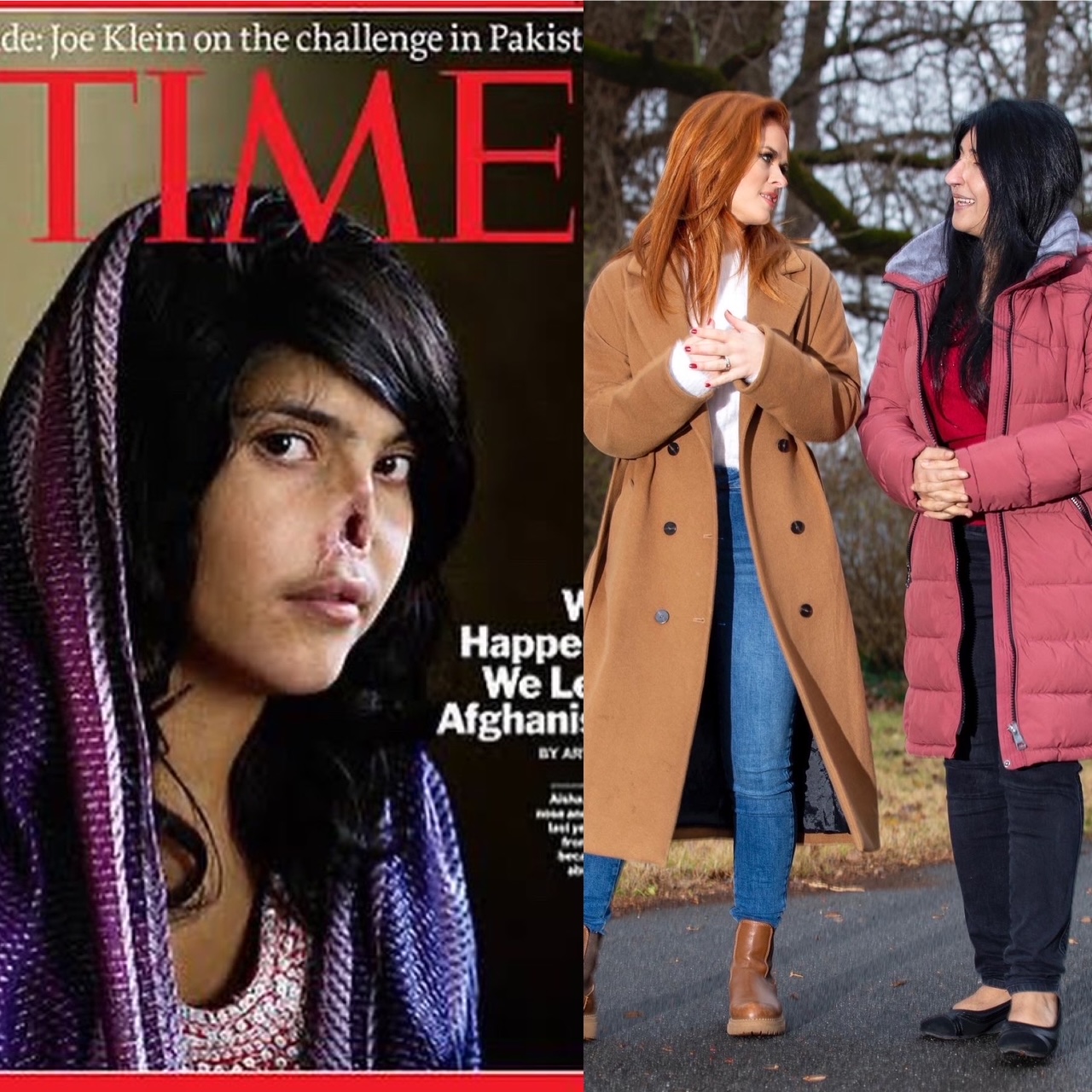
Bibi Aisha Featured on TIME Magazine – Book Release Coming Soon


Author Lauren Ungeldi and Bibi Aisha will be releasing a book centered around Bibi Aisha’s life story who was featured on the cover of TIME magazine in 2010. This week, TIME magazine featured in an interview between Angelina Jolie and Bibi Aisha which was released in the TIME’s online platform. 

Bibi Aisha was born in Afghanistan, protected and raised by her grandmother in the mountains, and then given in marriage to a Taliban leader at twelve years old. She was brutally mutilated in punishment for attempting to escape (her nose and ears cut off with a machete) and left to die. Bibi Aisha took refuge at an American military base where she was given medical care. After arriving in the United States several months later after her photo was featured on the cover of TIME magazine, she underwent over 30 reconstructive surgeries on her face and nose by some of the finest doctors and surgeons in America. 

Lauren says that the time she has spent with Bibi Aisha while working on the book has been nothing short of inspiring. Bibi’s gentle spirit, wisdom, generosity, and perspective regarding the plight of women in Afghanistan and around the globe is eye opening and deeply moving. 

The interview between Angelina Jolie and Bibi Aisha for TIME magazine touched Lauren’s soul in a way that surprised her. Angelina Jolie’s peaceful spirit and compassion was evident in each of her questions, in her gentle silences to absorb each word Bibi Aisha had spoken and honor the meaning held there, and in her wise words. Bibi’s authenticity and transparency to share her story shows a level of bravery and fortitude that few individuals possess. 

It is clear that Bibi and Angelina come from starkly different backgrounds and that their experiences could not be more different. And yet,  through this interview, emerges a commonality, a shared vision, a united heart which speaks to the unbreakable power of human connection. 


Bibi Aisha and Lauren Ungeldi will be releasing her book in the coming months, sharing her life’s story in full detail. They both believe that her story and message for the world has never been more needed.  While the world knew Bibi from her appearance on TIME Magazine in 2010, both Lauren and Bibi have said that there is far more to her story than the public knows and look forward to giving the world a window into her heart and mind like never before. 

Click for the Interview with Bibi Aisha and Angelina Jolie  as well as the special article for 100 Years of TIME,  Afghan Women and the Return of the Taliban. 

Follow the book release journey here and Bibi Aisha’s personal account here

Hello Africa


There are some places on this earth that seem to have a voice of their own. In the trees, in the wind, and in the sky. Africa is and will always be one of those places for me. A place where nature has a song of its own, where the air seems to whisper, where the sound of the earth’s voice has not been muted or silenced.

On a recent trip to Africa last year with my husband, Eralp Ungeldi, we felt the power of this wild and wonderful place. The individuals that we connected with were some of the most genuine, kind, and hospitable people we have ever met. The lush landscape wrapped its arms around us like a big hug from Mama Nature. Healing, inspiring, calming. 

While there, I had the opportunity to visit a school in a small Maasai village and sit with the students as they studied while Eralp Ungeldi spoke with the tribe leader. It was incredible to see the joy on the faces of the students and witness a unique educational environment.

Eralp Ungeldi and I cannot wait to return to this beautiful place again!


From Time Magazine – Bibi Aesha

I was so grateful to have the opportunity to share several days with Bibi Aesha who was featured on the cover of Time Magazine.

Bibi Aesha was born in Afghanistan, protected and raised by her grandmother in the mountains, and then given in marriage to a Taliban leader at twelve years old. She was brutally mutilated in punishment for attempting to escape, and took refuge at an American military base where she was given medical care. After arriving in the United States several months later, she underwent over 30 reconstructive surgeries on her face and nose by some of the finest doctors and surgeons in America. 

My time with Aesha was nothing short of inspiring. Her gentle spirit, wisdom, generosity, and perspective regarding the plight of women in Afghanistan and around the globe was eye opening and incredibly moving. 

We spent several days working together on an upcoming project (more info to come) and in that time we laughed, cried, cooked, shared stories, and left not only as collaborators, but friends. 

Now, more than ever, the voices of women across the world need to be heard. Aeasha’s story and contagious passion for speaking out for women globally has inspired me greatly. She will, no doubt, do the same for you. 

Give my dear friend a follow and stay tuned for what comes next!